The transition toward a more sustainable and resource-efficient global economy isn’t just changing how we produce energy, grow food, manage water and use natural resources.
It is also changing where capital is being invested.
Consider the scale:
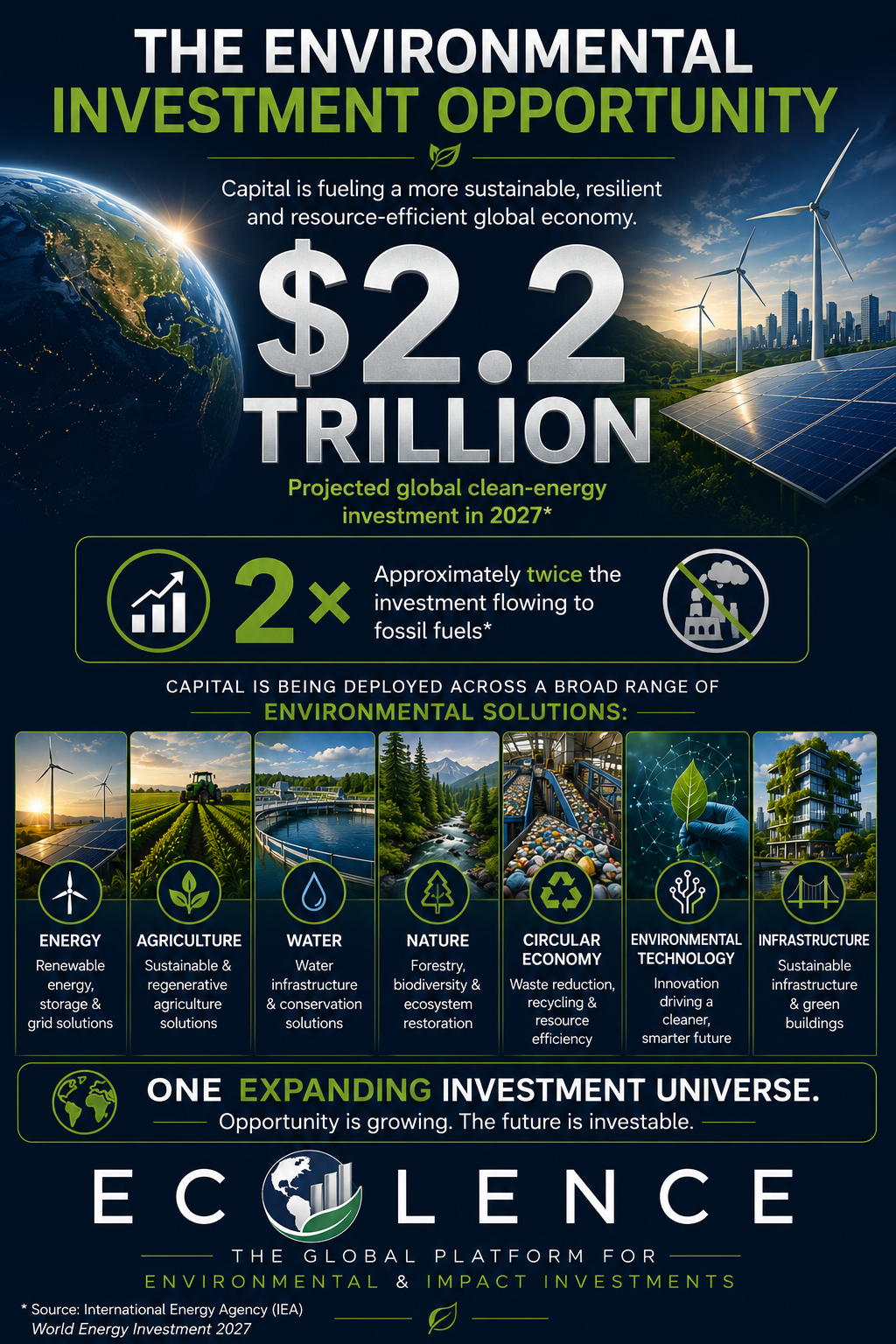
$2.2 TRILLION
Global investment in clean energy technologies—including renewables, nuclear, grids, storage, low-emissions fuels, efficiency and electrification—was projected to reach approximately $2.2 trillion in 2025.
That’s roughly twice the capital expected to flow into oil, natural gas and coal.
And clean energy represents only part of the environmental investment universe.
Capital is increasingly being deployed across:
• Renewable energy
• Energy storage and grid infrastructure
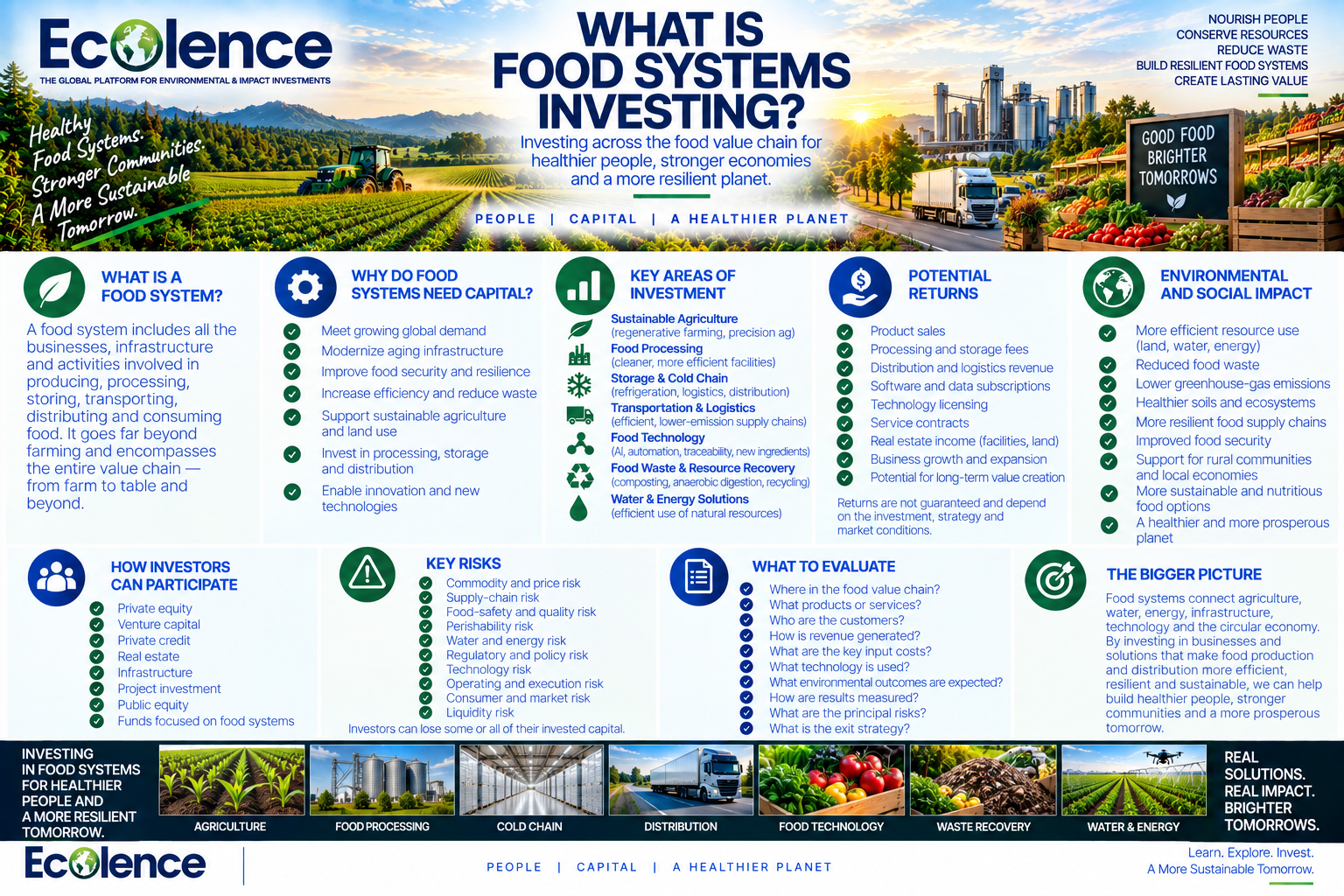
• Sustainable agriculture
• Water infrastructure
• Sustainable forestry
• Carbon and natural capital
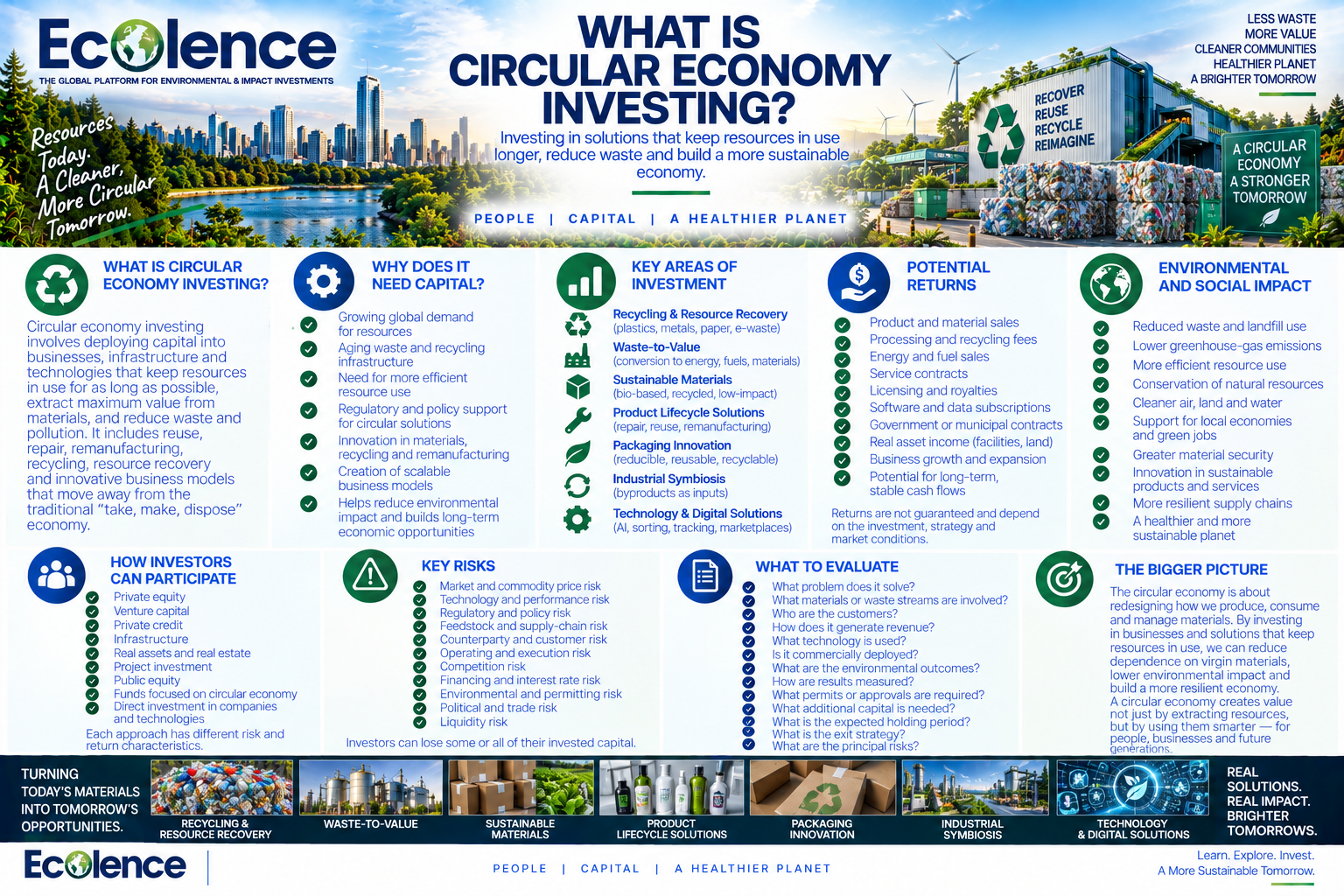
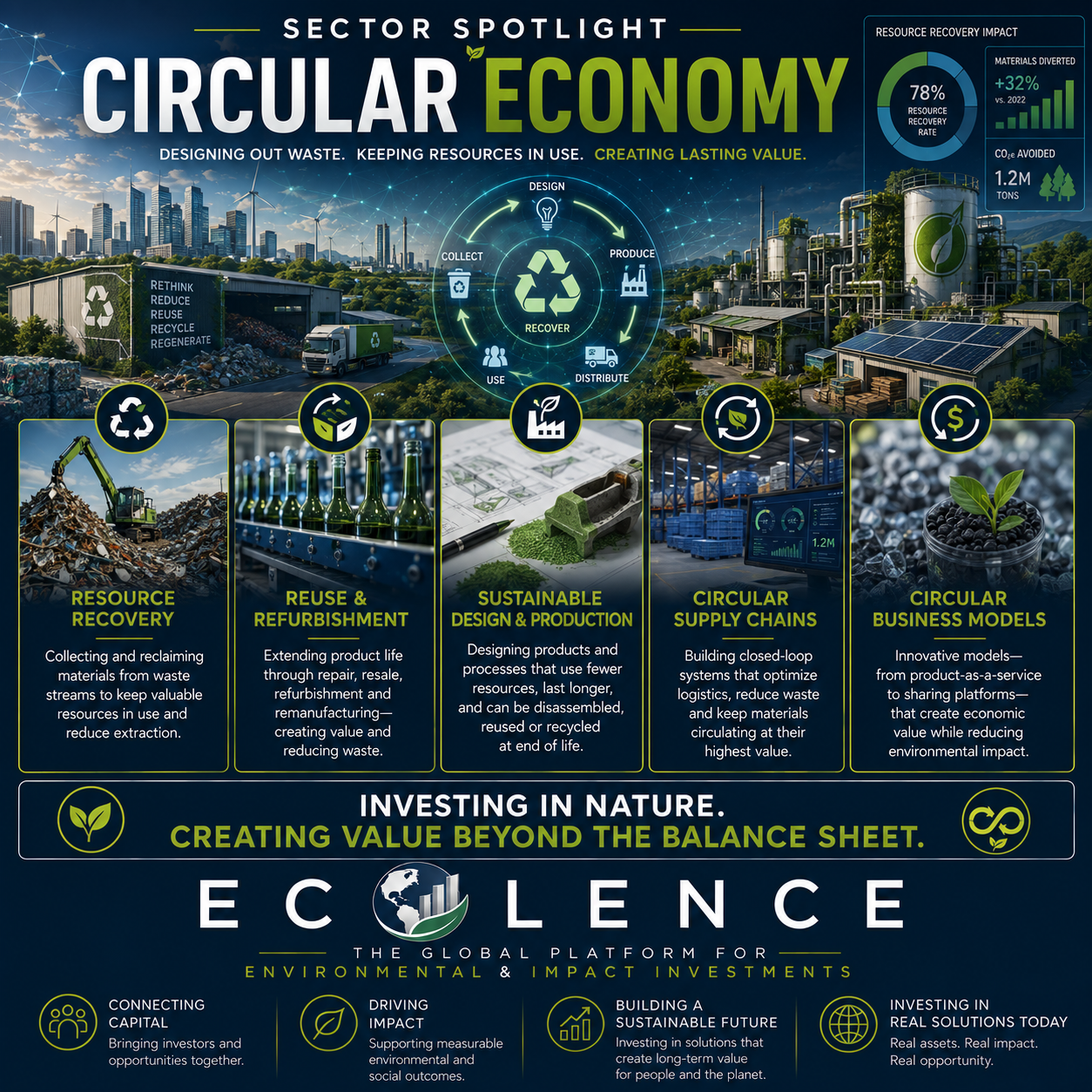
• Circular economy and recycling
• Green buildings and infrastructure
• Environmental and climate technology
Meanwhile, the broader global impact investing market has been estimated at approximately $1.57 trillion in assets under management, with thousands of organizations participating worldwide.
These numbers point to something larger than a trend.
They represent a fundamental shift in how capital is being deployed to businesses, infrastructure, technologies and real-world assets addressing some of the world’s largest environmental challenges.
And the opportunity isn’t confined to publicly traded companies.
Private funds. Infrastructure projects. Private equity. Private credit. Real assets. Venture capital. Reg D offerings. Regulation A offerings.
An expanding environmental economy is creating an expanding investment universe.
The challenge for investors?
Finding the opportunities.
That’s part of what we’re building Ecolence to solve.
One platform. An expanding investment universe.
Ecolence
The Global Platform for Environmental & Impact Investments