ECOLENCE LEARNING CENTER
Understand the World of Environmental Investing
Explore straightforward educational resources designed to help you understand environmental investment sectors, private-market structures, sustainability concepts and the fundamentals behind the opportunities available across the environmental economy.
NEW TO ENVIRONMENTAL INVESTING?
Start With the Fundamentals
FOUNDATIONAL GUIDES
01
Learn how capital is being deployed across businesses, infrastructure, real assets and technologies addressing environmental needs.
02
Learn how private-market investments differ from publicly traded stocks and what investors should understand before exploring them.
03
Learn about investment objectives, target returns, liquidity, holding periods and the risks associated with private investments.
EXPLORE THE LEARNING CENTER
What Would You Like to Learn About?
Investing 101
Core investment concepts, terminology and fundamentals.
Private Markets
Understand private funds, offerings and investment structures.
Environmental Investing
Learn about environmental, sustainable and impact investment approaches.
Natural Capital
Explore farmland, forestry, biodiversity and ecosystem-related investment.
Energy & Infrastructure
Renewable energy, storage, infrastructure and the energy transition.
Water
Water infrastructure, treatment, conservation and investment opportunities..
Carbon Markets
Carbon credits, markets, project structures and environmental commodities.
Climate & Environmental Technology
Technologies supporting environmental measurement, efficiency and solutions.
UNDERSTANDING THE INVESTMENT
Learn How Different Investment Structures Work
Environmental investment opportunities can be structured in very different ways. Understanding the structure is just as important as understanding the underlying environmental opportunity.
Markets • Sectors • Capital • Technology • Policy • Impact
EXPLORE THE ENVIRONMENTAL ECONOMY
Learn About the Markets Behind the Investments
FEATURED LEARNING
Explore Our Featured Guide

ENVIRONMENTAL INVESTING 101
Beyond Stocks: Understanding the Environmental Investment Universe
Environmental investing extends far beyond publicly traded companies. Explore how capital is being deployed across real assets, infrastructure, private businesses and environmental technologies.
BECOME A MORE INFORMED INVESTOR
Understanding the Investment Process
01 — Discover
How to identify opportunities and understand investment categories.
02 — Understand
How to read the investment profile and offering structure.
03 — Evaluate
Understanding returns, fees, risks, management and environmental objectives.
04 — Due Diligence
What information and documents investors may want to review.
05 — Decide
Understanding suitability, professional advice and making independent investment decisions.
We’re teaching people how to evaluate information, not telling them how to choose investments.
QUESTIONS EVERY PRIVATE-MARKET INVESTOR SHOULD UNDERSTAND
What is a target return?
A target return is the investment return a sponsor aims to achieve based on its strategy and assumptions. It is an objective or projection—not a guarantee—and actual returns may be higher or lower.
What is a holding period?
A holding period is the expected length of time an investor will remain invested before the investment is sold, redeemed, or otherwise exited. Actual holding periods may be longer or shorter depending on the investment and market conditions.
What does illiquid mean?
Illiquid means an investment cannot easily or quickly be converted into cash. Investors may need to hold the investment for an extended period, and there may be limited or no ability to sell or redeem it before the expected exit.
What is an accredited investor?
An accredited investor is an individual or organization that meets certain financial or professional criteria established under U.S. securities laws, allowing them to participate in certain private investment offerings that may not be available to the general public.
What is a PPM?
A Private Placement Memorandum (PPM) is a disclosure document used in many private securities offerings. It describes the investment, offering terms, management, fees, potential conflicts, and important risk factors to help prospective investors evaluate the opportunity.
What is a subscription agreement?
A subscription agreement is a legal contract between an investor and the issuer or fund that sets out the terms of the investment. It typically includes the investment amount, investor representations, eligibility requirements, and agreement to be bound by the offering’s terms.
What are management fees?
Management fees are fees charged by an investment manager or sponsor for managing and operating an investment or fund. They are typically calculated as a percentage of invested capital, assets, or commitments and can reduce an investor’s overall return.
What is a preferred return?
A preferred return is a minimum return that certain investors are entitled to receive before profits are shared with the sponsor or manager under an investment’s distribution structure. It is generally a priority in the distribution waterfall, not a guaranteed return.
What is an exit strategy?
An exit strategy is the planned method for ending an investment and returning capital to investors. This may involve selling an asset or business, refinancing, a merger or acquisition, redemption, or another liquidity event.
What is due diligence?
Due diligence is the process of researching and evaluating an investment before making a decision. It may include reviewing financial information, offering documents, risks, fees, management experience, legal structure, and other factors relevant to the opportunity.
LATEST EDUCATION
Continue Learning
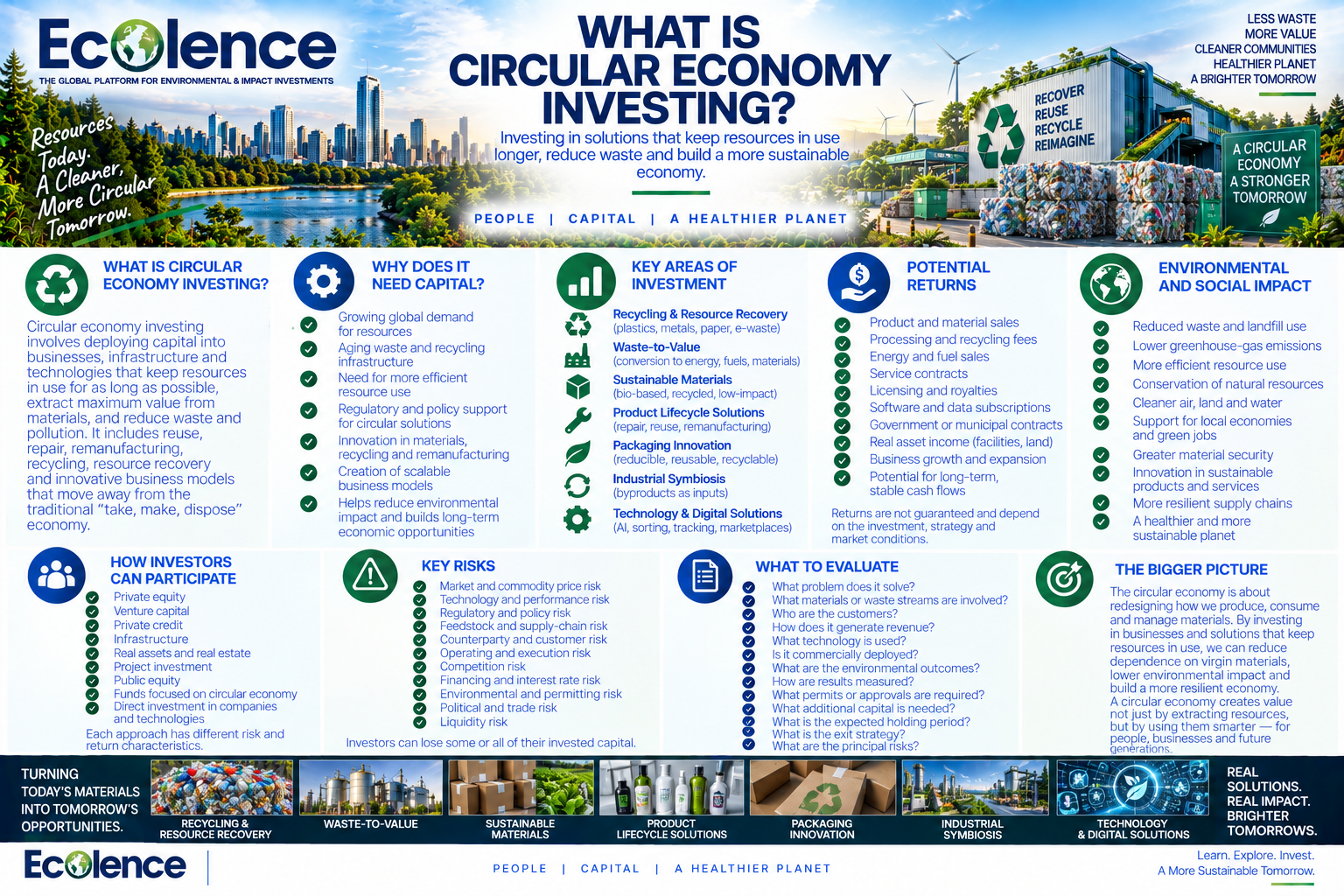
Environmental Investing
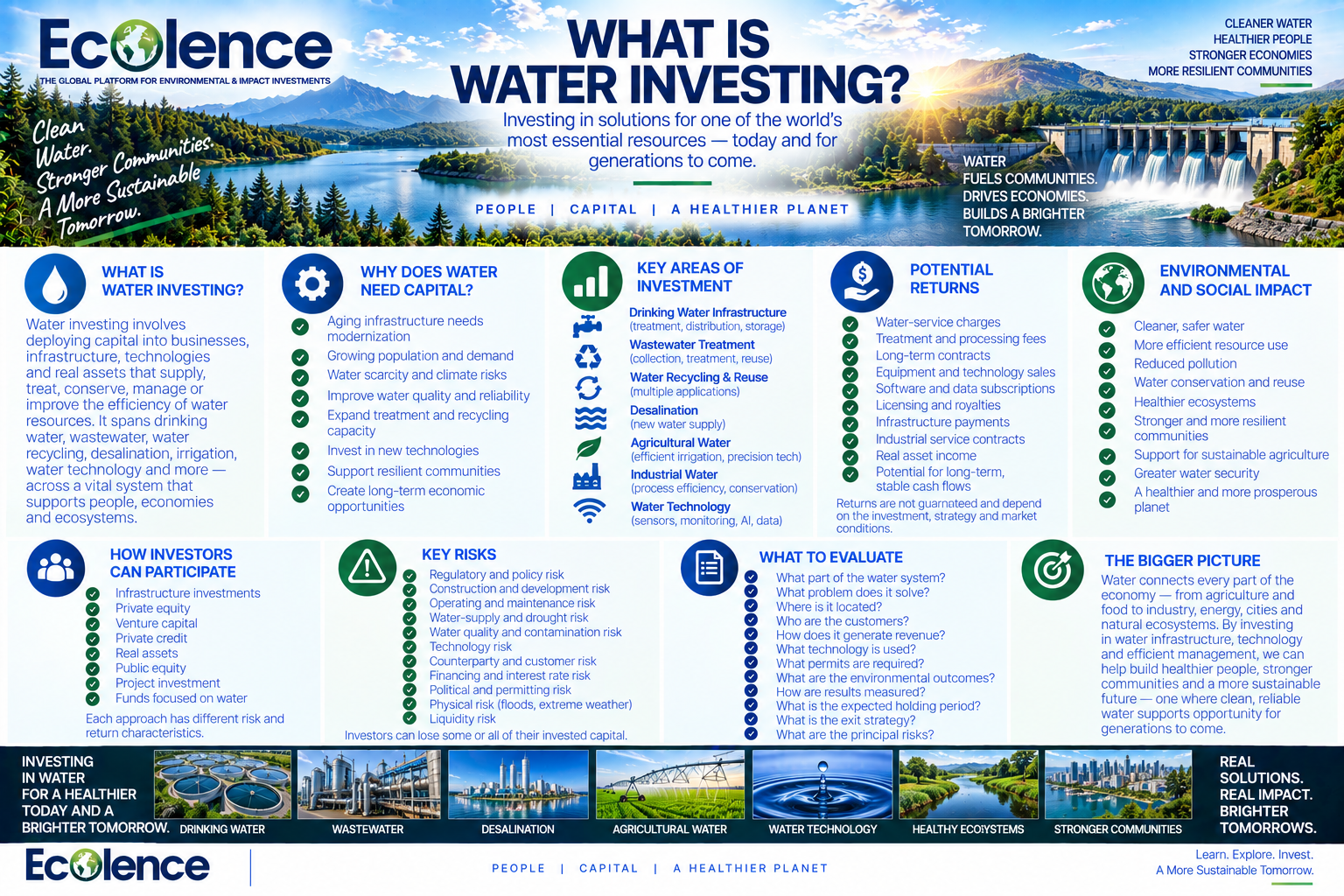
Water
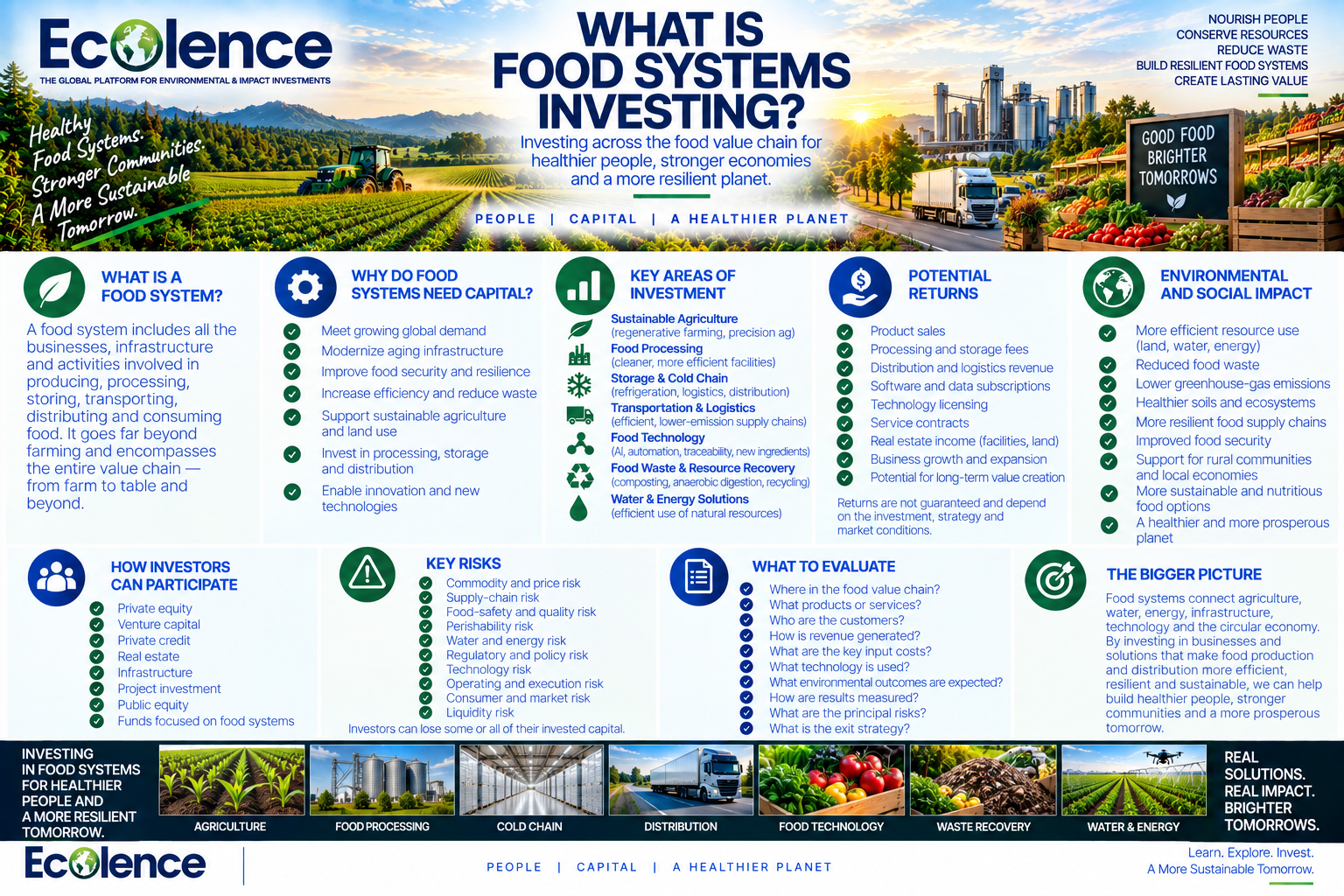
Environmental Investing
FROM KNOWLEDGE TO DISCOVERY
Understand the Market. Then Explore the Opportunities.
Once you understand the sectors, structures and concepts behind environmental investing, explore investment opportunities across the Ecolence marketplace.