WHAT IS BIODIVERSITY?
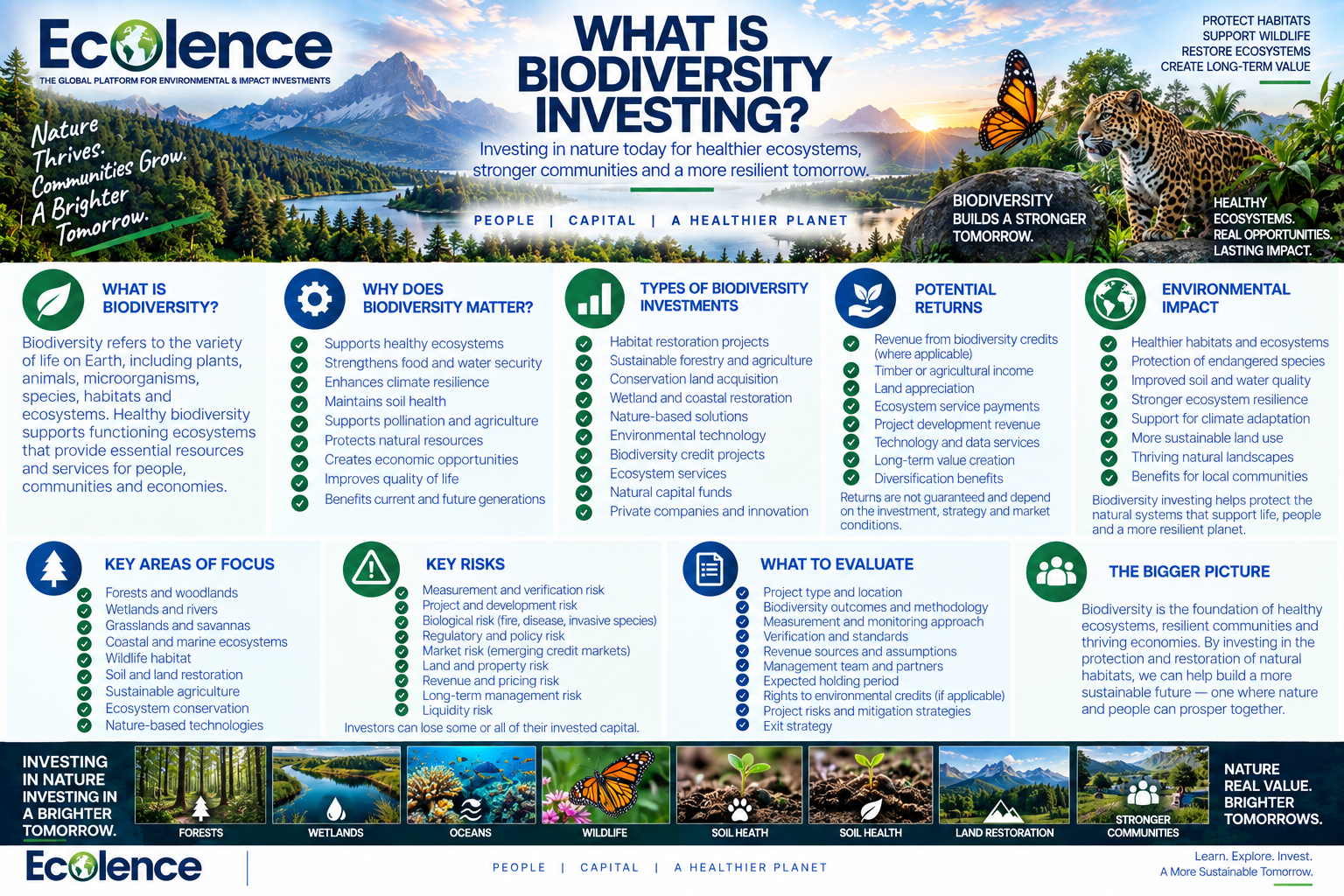
Biodiversity refers to the variety of life within the natural world.
It includes diversity among:
Plants
Animals
Microorganisms
Species
Habitats
Ecosystems
Biodiversity is not simply about the number of species in a particular location. It also involves the relationships among living organisms and the ecosystems that support them.
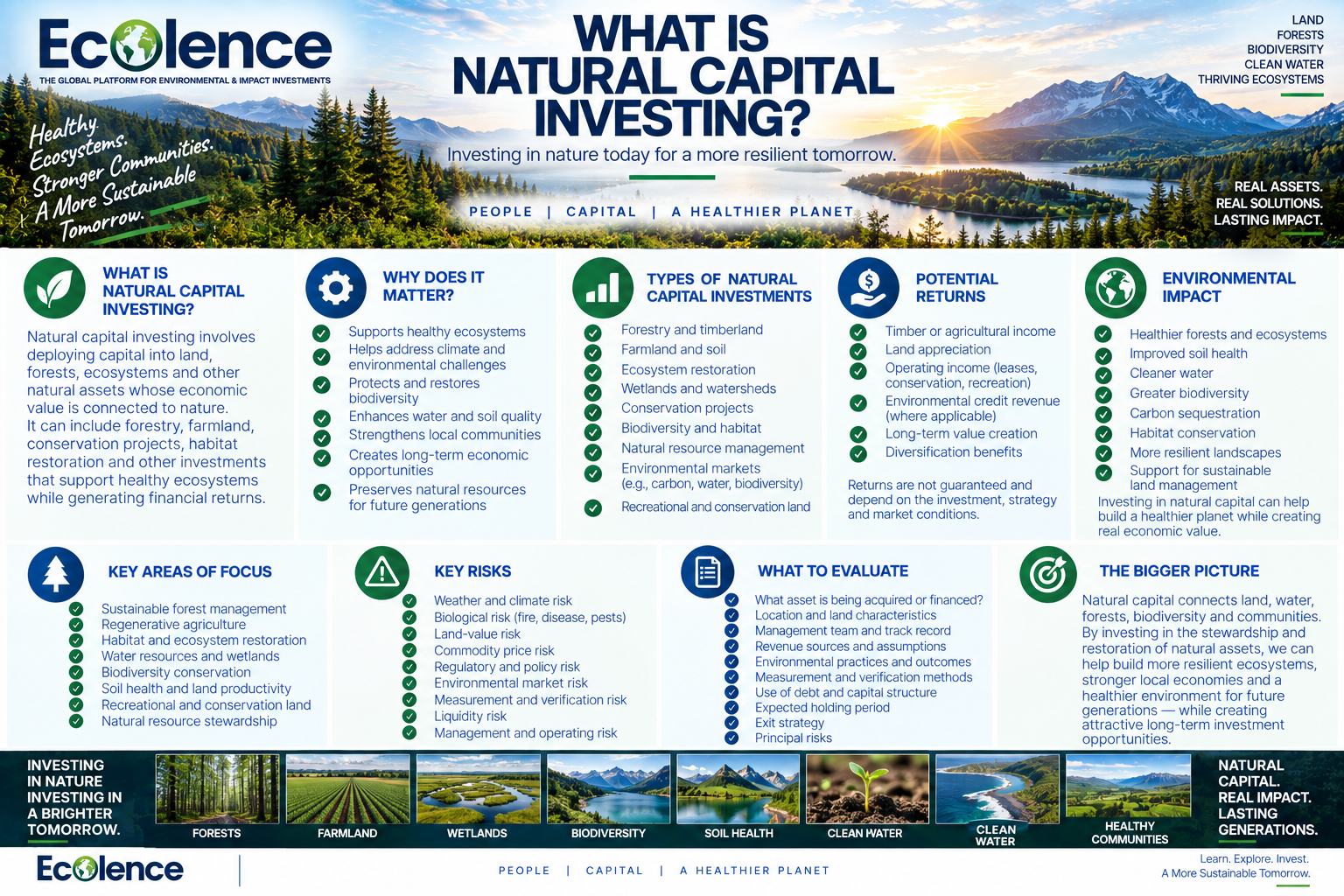
Forests, wetlands, grasslands, rivers, farmland and coastal environments can all contain different forms of biodiversity.
These ecosystems can also provide services with significant economic importance.
WHY DOES BIODIVERSITY MATTER ECONOMICALLY?
Healthy ecosystems support many activities on which economies depend.
These can include:
Agricultural productivity
Pollination
Water filtration
Soil formation
Flood management
Forestry
Fisheries
Tourism and recreation
Natural-resource availability
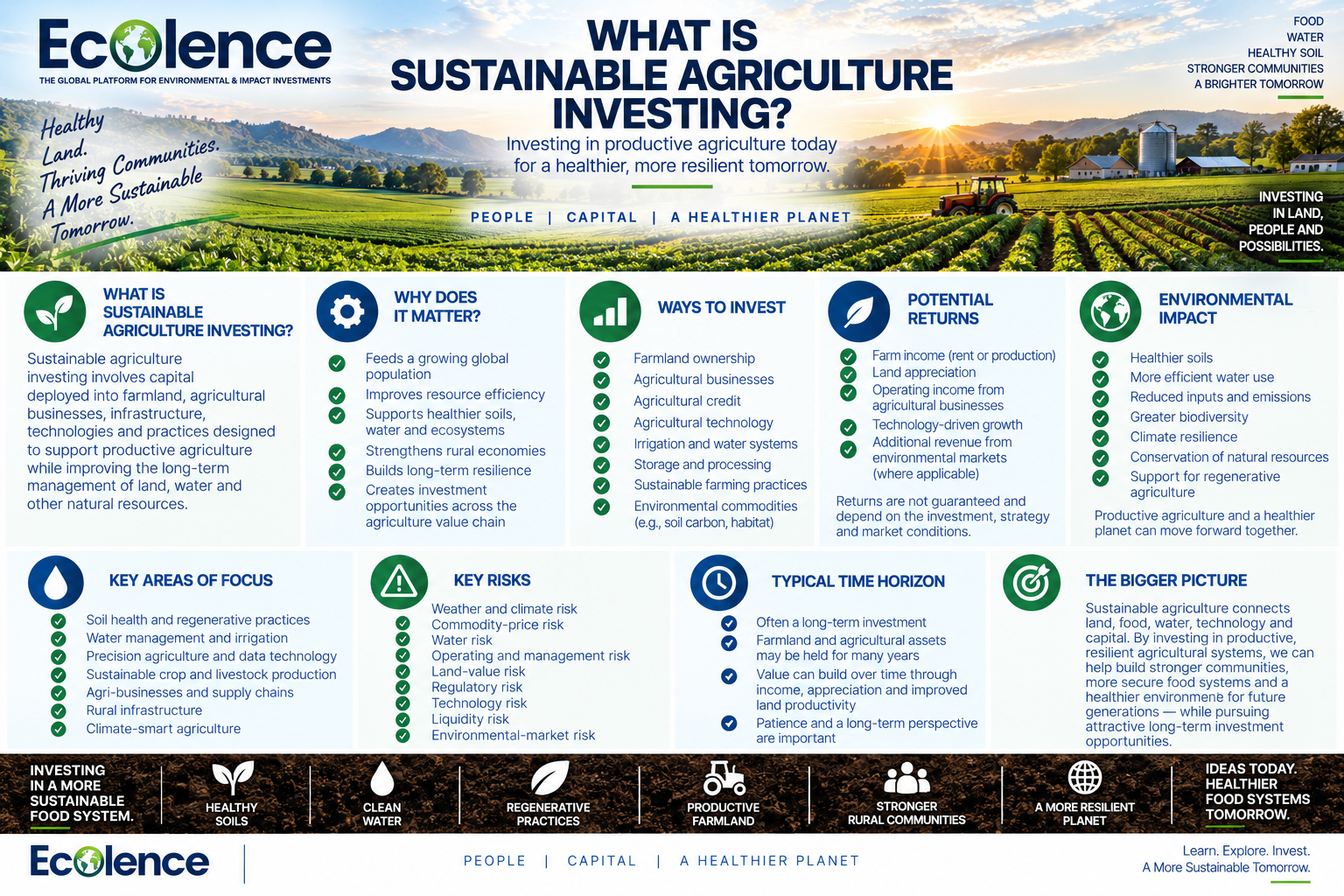
For example, agriculture depends on productive soil, water and functioning ecosystems.
Forests can provide timber while also supporting habitat and watersheds.
Wetlands can provide habitat while helping manage water and flooding.
Biodiversity therefore has environmental importance, but it can also be connected to the productivity and resilience of real economic assets.
WHAT IS BIODIVERSITY INVESTING?
Biodiversity investing involves deploying capital into businesses, land, projects or technologies that seek to protect, restore or improve ecosystems and biodiversity while pursuing an economic objective.
Potential investments might involve:
Habitat restoration
Forest restoration
Wetland restoration
Sustainable forestry
Sustainable agriculture
Conservation projects
Watershed restoration
Coastal ecosystems
Environmental monitoring technology
Nature-related businesses
Biodiversity investing can therefore overlap significantly with natural capital, agriculture, forestry, water and environmental technology.
WHY DOES BIODIVERSITY NEED CAPITAL?
Protecting or restoring ecosystems can require substantial resources.
Capital may be needed for:
Land acquisition
Restoration work
Planting
Habitat management
Environmental monitoring
Scientific assessment
Project development
Long-term land management
Technology
Verification and reporting
Historically, much biodiversity conservation has been financed by governments, charities and philanthropic organizations.
Investment markets are exploring whether private capital can complement those sources where projects can establish credible economic models.
HOW CAN INVESTORS PARTICIPATE?
There is no single form of biodiversity investment.
Investors may participate through several approaches.
NATURAL CAPITAL FUNDS
Funds may acquire or manage land with conservation, restoration or sustainable-use objectives.
FORESTRY AND FARMLAND
Land-management strategies may seek to combine productive use with habitat or ecosystem improvements.
RESTORATION PROJECTS
Capital can potentially finance projects restoring forests, wetlands, grasslands or other ecosystems.
PRIVATE COMPANIES
Businesses may develop products or services related to conservation, ecosystem management or environmental monitoring.
ENVIRONMENTAL TECHNOLOGY
Technology companies may provide satellite data, sensors, environmental DNA analysis, artificial intelligence or other tools used to measure biodiversity.
EMERGING ENVIRONMENTAL MARKETS
Some markets are developing mechanisms intended to attach economic value to verified biodiversity outcomes.
Each approach has different economics and risks.
WHAT ARE BIODIVERSITY CREDITS?
One emerging concept is the biodiversity credit.
Broadly, biodiversity credits seek to represent a measured and verified biodiversity-related outcome associated with a defined project or activity.
This area is still developing, and programs can differ significantly in how outcomes are defined, measured and verified.
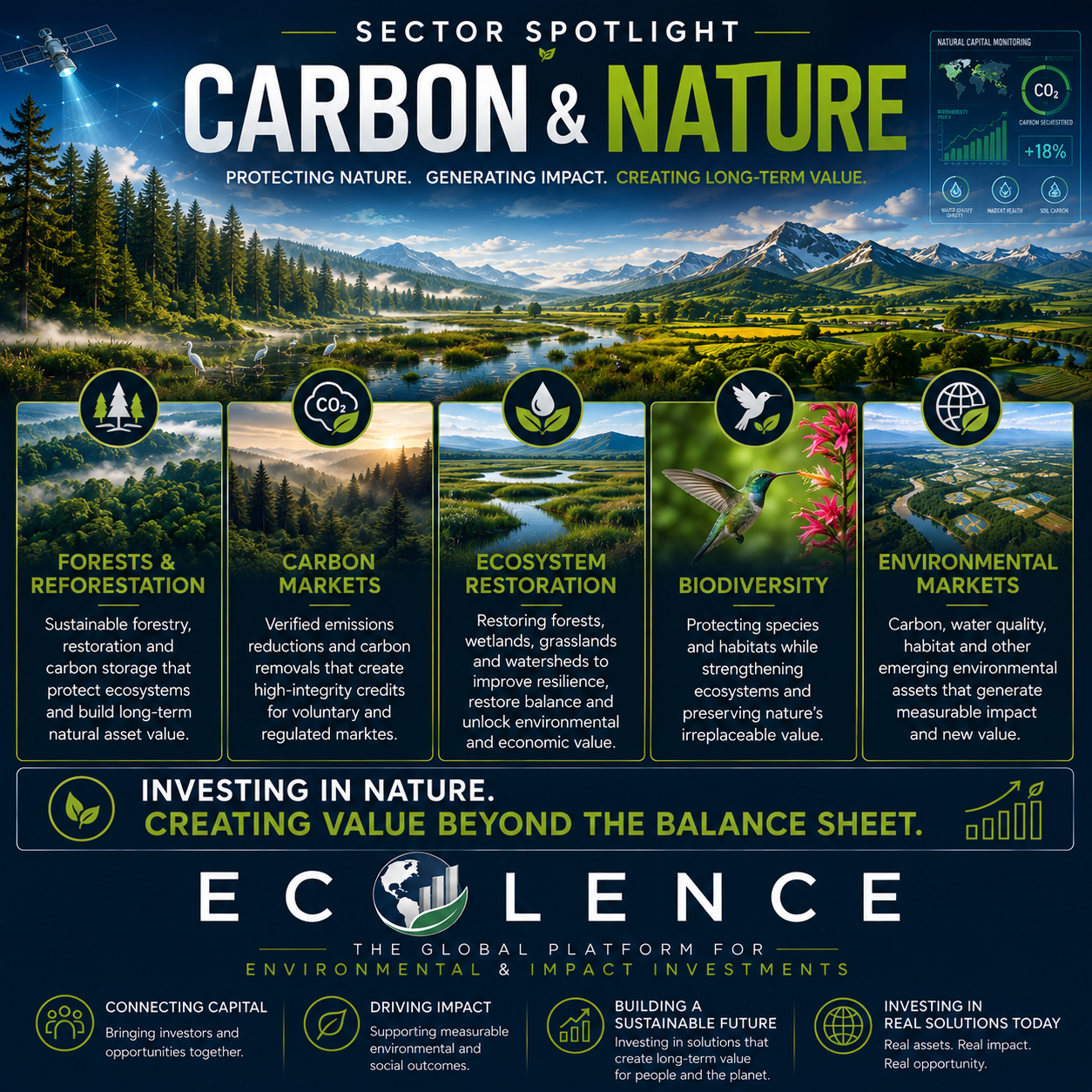
Biodiversity credits should not simply be treated as another name for carbon credits.
Carbon markets generally use greenhouse-gas measurements such as tons of carbon-dioxide equivalent.
Biodiversity is much more multidimensional.
A forest, wetland and grassland cannot necessarily be reduced to one universally comparable biodiversity measurement.
That makes biodiversity markets particularly complex.
BIODIVERSITY CREDITS vs. CARBON CREDITS
The distinction is important.
CARBON CREDITS
Generally focus on quantified greenhouse-gas reductions or removals under an applicable methodology.
BIODIVERSITY CREDITS
Seek to represent outcomes associated with ecosystems, species, habitat or ecological condition under a particular framework.
A project could potentially have both carbon and biodiversity characteristics, but the two environmental outcomes should not automatically be treated as interchangeable.
Investors should understand exactly what is being measured and sold.
HOW IS BIODIVERSITY MEASURED?
Measuring biodiversity can involve multiple indicators.
Depending on the project, these may include:
Species abundance
Species diversity
Habitat condition
Vegetation
Forest cover
Water conditions
Ecosystem connectivity
Presence of particular species
Changes in land condition
Measurement tools can include:
Field surveys
Satellite imagery
Remote sensing
Camera traps
Acoustic monitoring
Environmental DNA
Sensors
Geospatial analysis
Artificial intelligence
Because ecosystems are complex, investors should understand what a project’s biodiversity metric actually measures.
WHAT IS ENVIRONMENTAL DNA?
Environmental DNA, often called eDNA, is one example of how technology can assist biodiversity monitoring.
Living organisms leave genetic material in their environment.
Samples collected from water, soil or other environments can potentially help scientists identify organisms that are present.
This can provide another tool for monitoring biodiversity without relying exclusively on traditional observation.
Technologies like eDNA illustrate the growing connection between biodiversity investing and environmental technology.
WHAT IS HABITAT RESTORATION?
Habitat restoration seeks to improve ecosystems that have been degraded or altered.
Projects might involve:
Restoring wetlands
Replanting forests
Restoring native vegetation
Improving waterways
Removing invasive species
Reconnecting fragmented habitat
Restoring coastal ecosystems
A restoration project may take many years to produce meaningful ecological results.
Investors should therefore understand both the project timeline and the financial model supporting the investment.
WHERE CAN ECONOMIC RETURNS COME FROM?
This is one of the most important questions.
Biodiversity itself does not automatically create an investment return.
Potential economic models may include:
Sustainable forestry or agriculture
Land appreciation
Conservation agreements
Environmental-credit markets
Payments for ecosystem services
Project-development revenue
Technology and data services
Sale or leasing of underlying assets
Some investments may combine several sources.
The existence of environmental benefits should not be confused with the existence of a viable financial return.
WHAT ARE PAYMENTS FOR ECOSYSTEM SERVICES?
Another concept investors may encounter is payments for ecosystem services.
These arrangements seek to provide economic compensation for maintaining or improving environmental functions.
Depending on the program, this might involve outcomes associated with:
Water
Habitat
Forests
Watersheds
Soil
Biodiversity
Structures vary substantially, and not every ecosystem service has an established market.
Investors should understand who actually pays for the environmental service and why.
WHAT ARE THE MAJOR RISKS?
Biodiversity investments can involve substantial risks.
MEASUREMENT RISK
Biodiversity can be difficult to quantify consistently.
MARKET RISK
Markets for biodiversity-related credits or services may develop differently than expected.
PROJECT RISK
Restoration or conservation projects may fail to achieve projected outcomes.
BIOLOGICAL RISK
Disease, invasive species, fire or other events can damage ecosystems.
REGULATORY RISK
Environmental-market rules and conservation policies may change.
REVENUE RISK
Projected environmental revenues may never materialize.
VERIFICATION RISK
Projects may fail to satisfy applicable standards.
LAND RISK
Land values or land-use conditions may change.
LIQUIDITY RISK
Private biodiversity investments may be difficult to sell.
LONG-TERM MANAGEMENT RISK
Environmental outcomes may require continued management long after initial project development.
Investors can lose some or all of their invested capital.
BIODIVERSITY DOES NOT AUTOMATICALLY MEAN INVESTMENT VALUE
This principle should remain consistent throughout Ecolence.
A project can have a meaningful ecological purpose without necessarily being a financially attractive investment.
Investors should separately evaluate:
Environmental outcomes
and
Investment economics
Then they can consider how those two components interact.
A compelling conservation story does not replace analysis of revenue, expenses, management, financing, liquidity and risk.
WHAT SHOULD AN INVESTOR EVALUATE?
Before considering a biodiversity-related investment, investors should understand:
What ecosystem or habitat is involved?
Where is the project located?
Who owns or controls the land?
What biodiversity outcome is being targeted?
How is the baseline established?
How will changes be measured?
Who verifies the results?
What methodology or framework is being used?
How will the investment generate revenue?
Are biodiversity credits assumed in the financial projections?
Who is expected to purchase them?
How long must environmental outcomes be maintained?
Who manages the project?
What happens if the expected biodiversity improvement does not occur?
What is the investment exit strategy?
What are the principal risks?
The more dependent an investment is on an emerging environmental market, the more important these questions become.
BIODIVERSITY AND NATURAL CAPITAL
Biodiversity and natural capital are closely related, but they are not identical.
NATURAL CAPITAL considers the broader economic and environmental value associated with natural assets such as forests, soil, water and ecosystems.
BIODIVERSITY focuses more specifically on the variety, condition and functioning of living organisms and ecosystems.
A natural-capital investment may therefore include biodiversity as one component of its strategy.
THE BIGGER PICTURE
Nature is not a single asset class.
It is an interconnected system of land, water, plants, animals, soil and ecosystems supporting much of the physical economy.
Investment markets are beginning to explore ways of directing more capital toward protecting and restoring those systems.
That creates potential opportunities—but also substantial challenges.
Biodiversity is difficult to measure.
Markets are still developing.
Environmental outcomes can take years to emerge.
And a valuable ecosystem does not automatically create a profitable investment.
For Ecolence, biodiversity investing is important because it illustrates where the environmental investment universe may be heading:
Beyond simply financing companies and infrastructure toward financing the health, productivity and restoration of the natural systems upon which economic activity ultimately depends.