They are often used interchangeably.
But they don’t mean exactly the same thing.
As investors increasingly consider environmental and social factors alongside financial performance, several different approaches to investing have emerged. Three of the most common are Sustainable Investing, ESG Investing and Impact Investing.
So what’s the difference?
SUSTAINABLE INVESTING
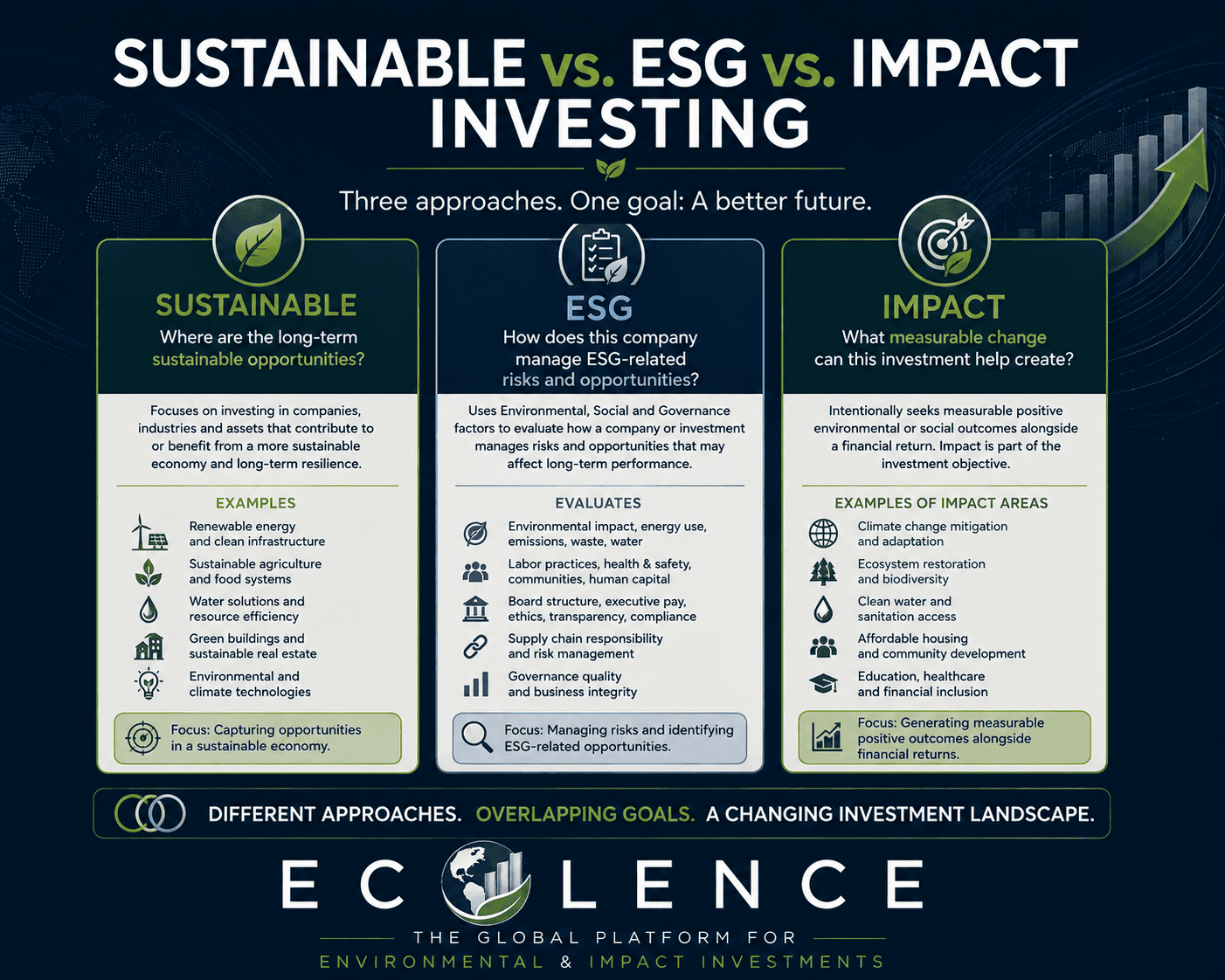
Sustainable investing is a broad approach that seeks to invest in companies, industries and assets positioned to contribute to—or benefit from—a more sustainable economy.
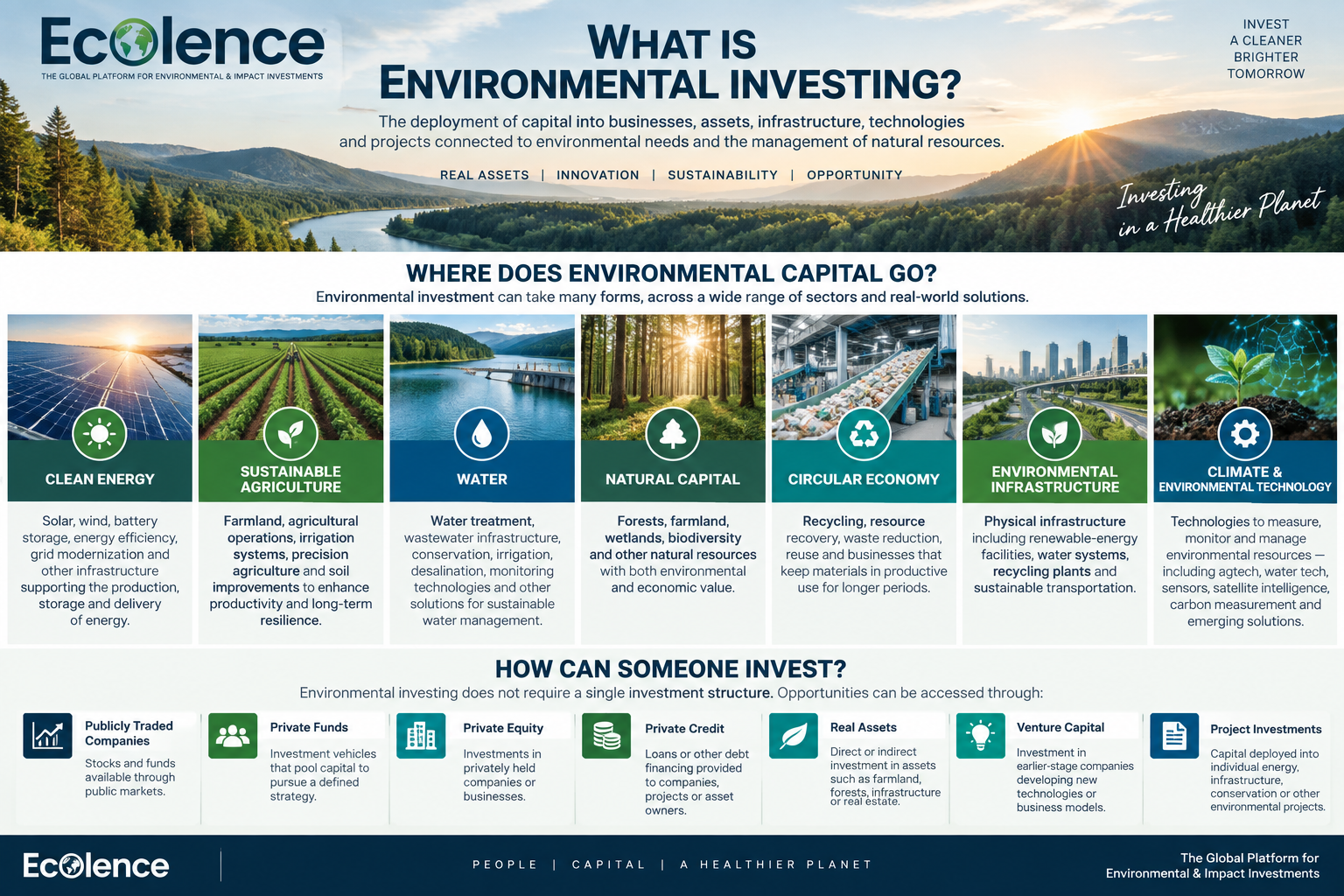
That might include renewable energy, sustainable agriculture, water infrastructure, resource efficiency, green buildings or environmental technologies.
Think:
“Where are the long-term sustainable opportunities?”
ESG INVESTING
ESG stands for Environmental, Social and Governance.
Rather than defining a specific type of investment, ESG generally provides a framework for evaluating how environmental, social and governance factors may affect a company or investment.
Investors might examine energy use, emissions, labor practices, supply chains, board structure, business ethics and other factors alongside traditional financial analysis.
Think:
“How does this company manage ESG-related risks and opportunities?”
IMPACT INVESTING
Impact investing goes a step further by intentionally seeking a measurable positive environmental or social outcome alongside a financial return.
The intended impact is part of the investment objective rather than simply an additional consideration.
Think:
“What measurable change can this investment help create?”
So while the approaches can overlap, their emphasis is different:
SUSTAINABLE → Investing for a more sustainable future.
ESG → Evaluating environmental, social and governance factors.
IMPACT → Intentionally pursuing measurable positive outcomes alongside financial returns.
An investment can potentially fit more than one category.
A renewable-energy infrastructure project, for example, might be considered sustainable, evaluated using ESG factors and structured with specific environmental impact objectives.
Understanding these distinctions can help investors better understand what they are investing in—and what they expect their capital to accomplish.
At Ecolence, our focus is on helping investors discover the growing universe of environmental and impact investment opportunities.
Ecolence
The Global Platform for Environmental & Impact Investments