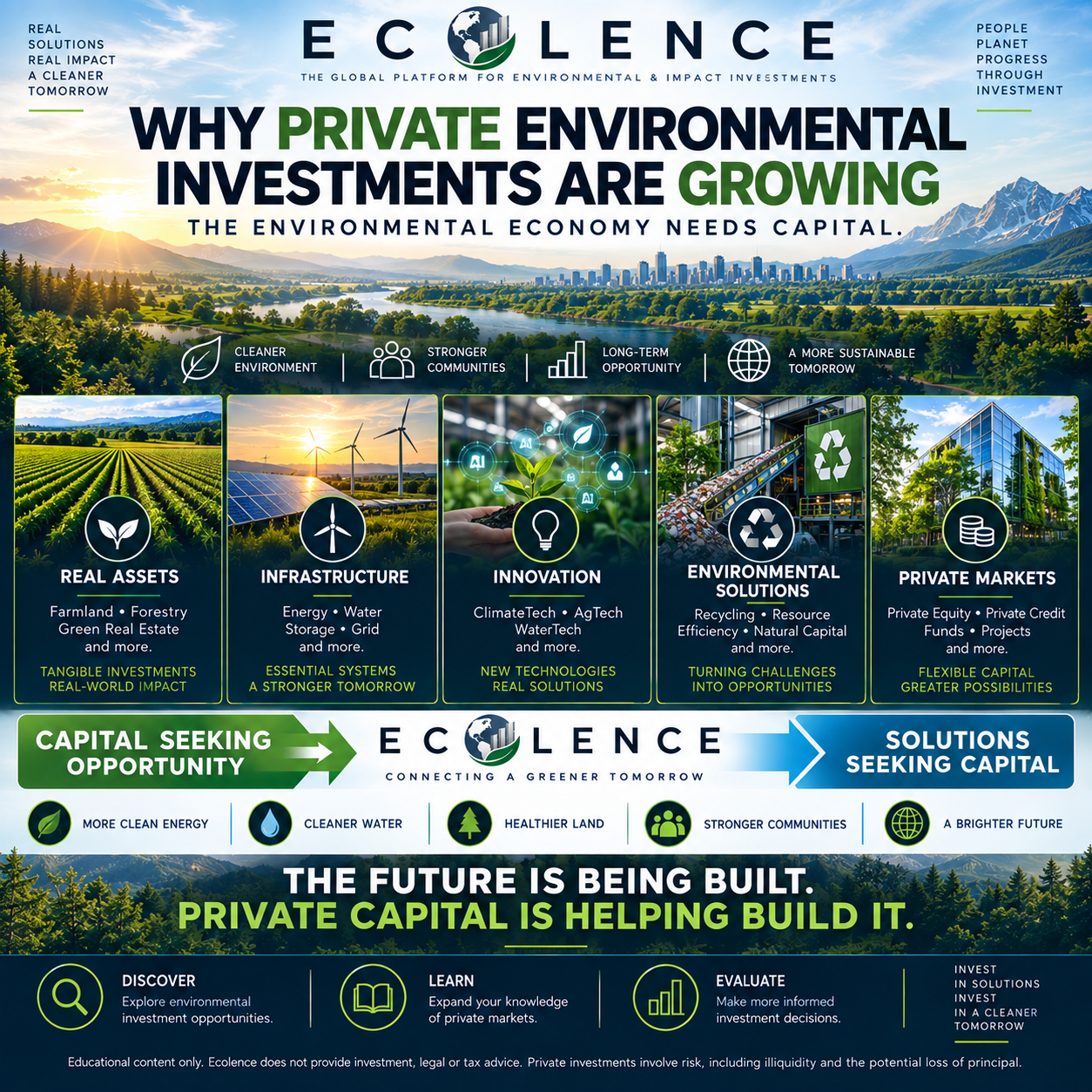
Some of tomorrow’s most important environmental solutions may never begin on a public stock exchange.
They begin with a project, a piece of land, new technology, infrastructure—and often, private capital.
Across the environmental economy, investors are increasingly finding opportunities outside traditional public markets.
ENVIRONMENTAL SOLUTIONS REQUIRE CAPITAL
Solar facilities, water systems, sustainable farmland, battery storage and recycling facilities require significant investment.
Private capital can help finance these projects and bring environmental solutions to scale.
REAL-WORLD ASSETS ARE BECOMING INVESTABLE
Environmental investing isn’t limited to owning company shares.
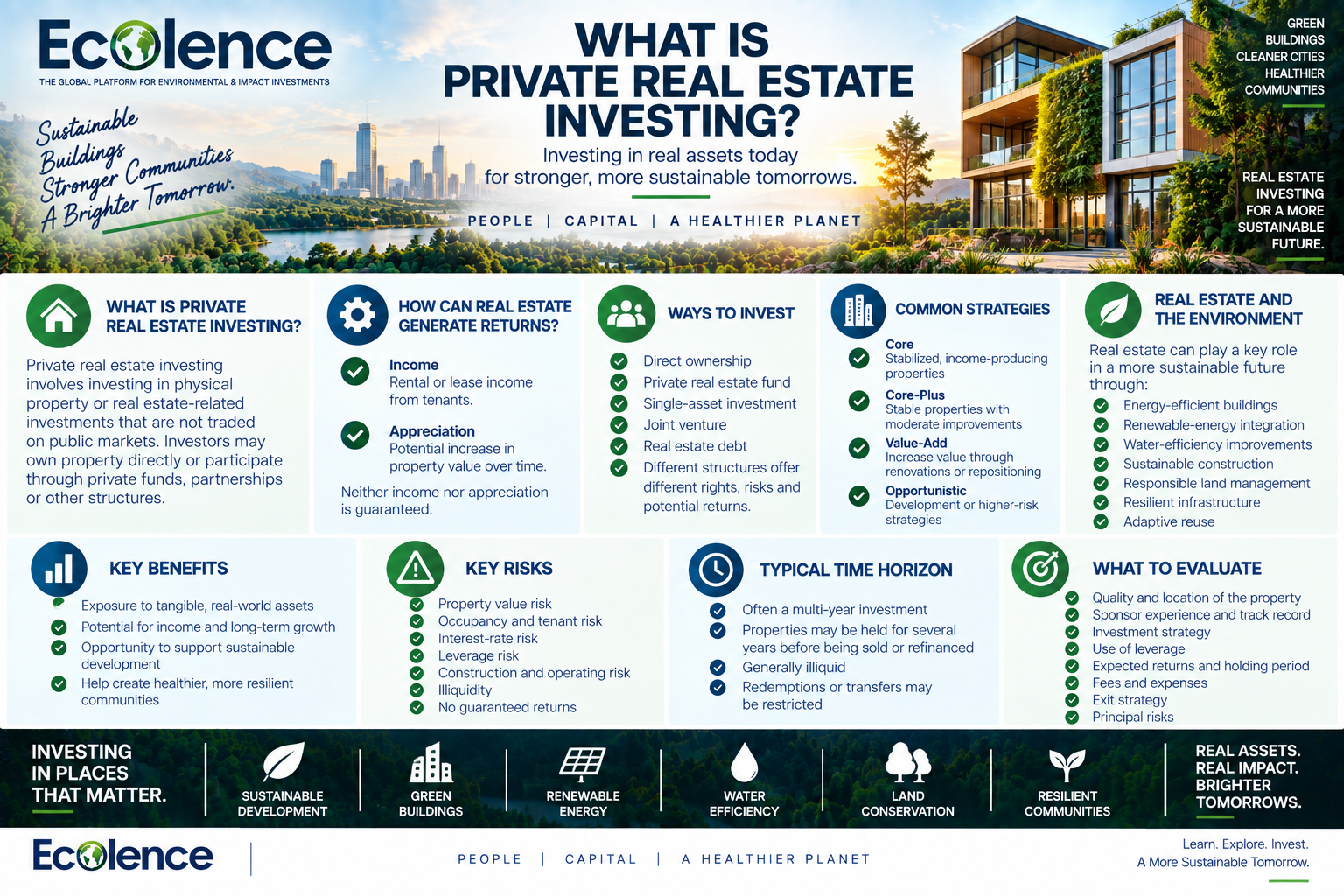
Investors can potentially gain exposure to farmland, renewable-energy infrastructure, forests, water projects, green buildings and other real assets—connecting capital directly with the physical economy.
INNOVATION OFTEN STARTS PRIVATE
Many emerging technologies begin with privately held companies.
Energy storage. AgTech. Water technology. Advanced recycling. Carbon measurement. Environmental data.
Private equity and venture capital can help move these innovations from concept to commercial scale.
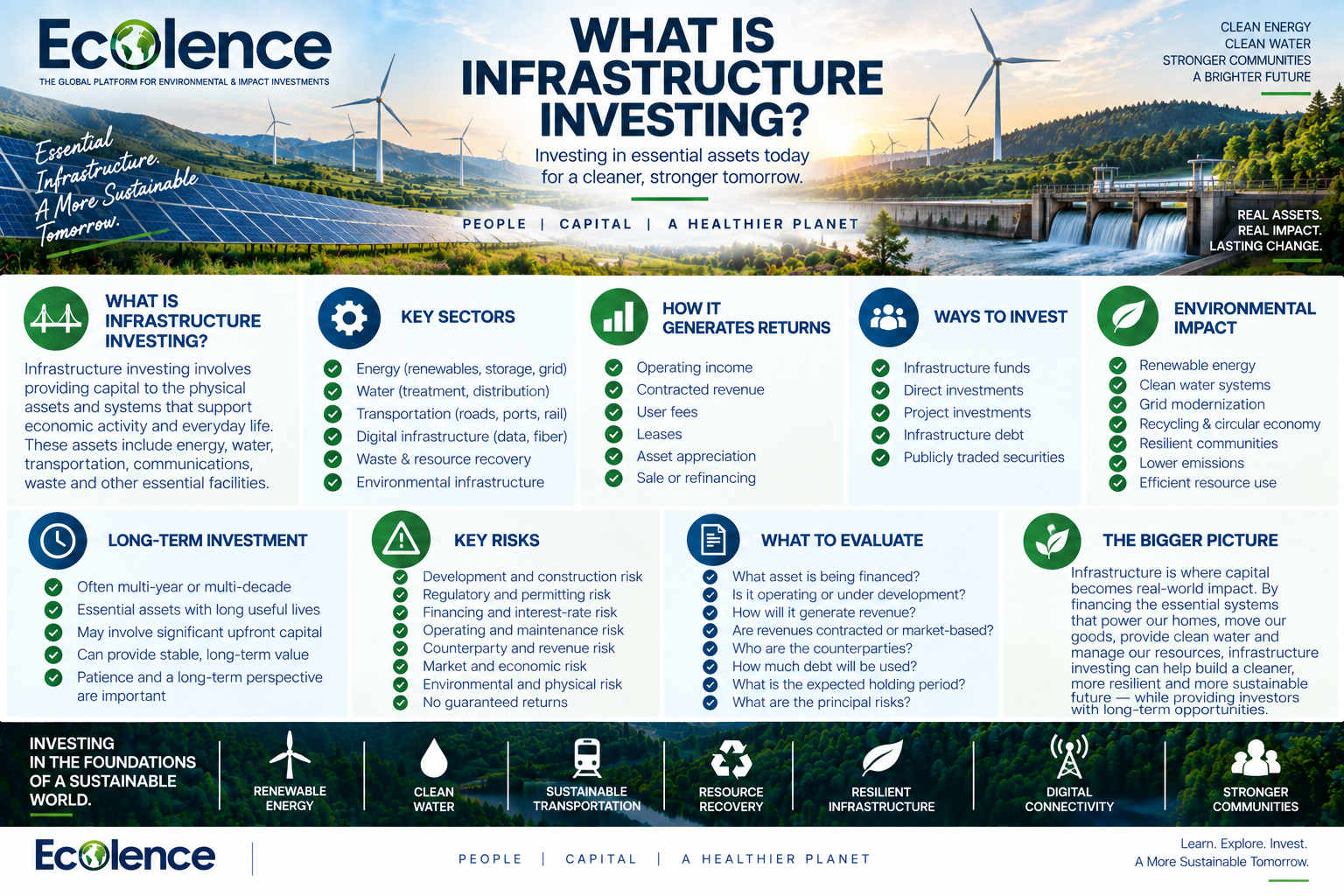
INFRASTRUCTURE NEEDS CAPITAL
The environmental transition isn’t simply a technology story.
It’s an infrastructure story.
Energy generation must be built. Grids modernized. Water systems upgraded. Waste processed. Agricultural infrastructure improved.
All of it requires capital.
ACCESS IS EVOLVING
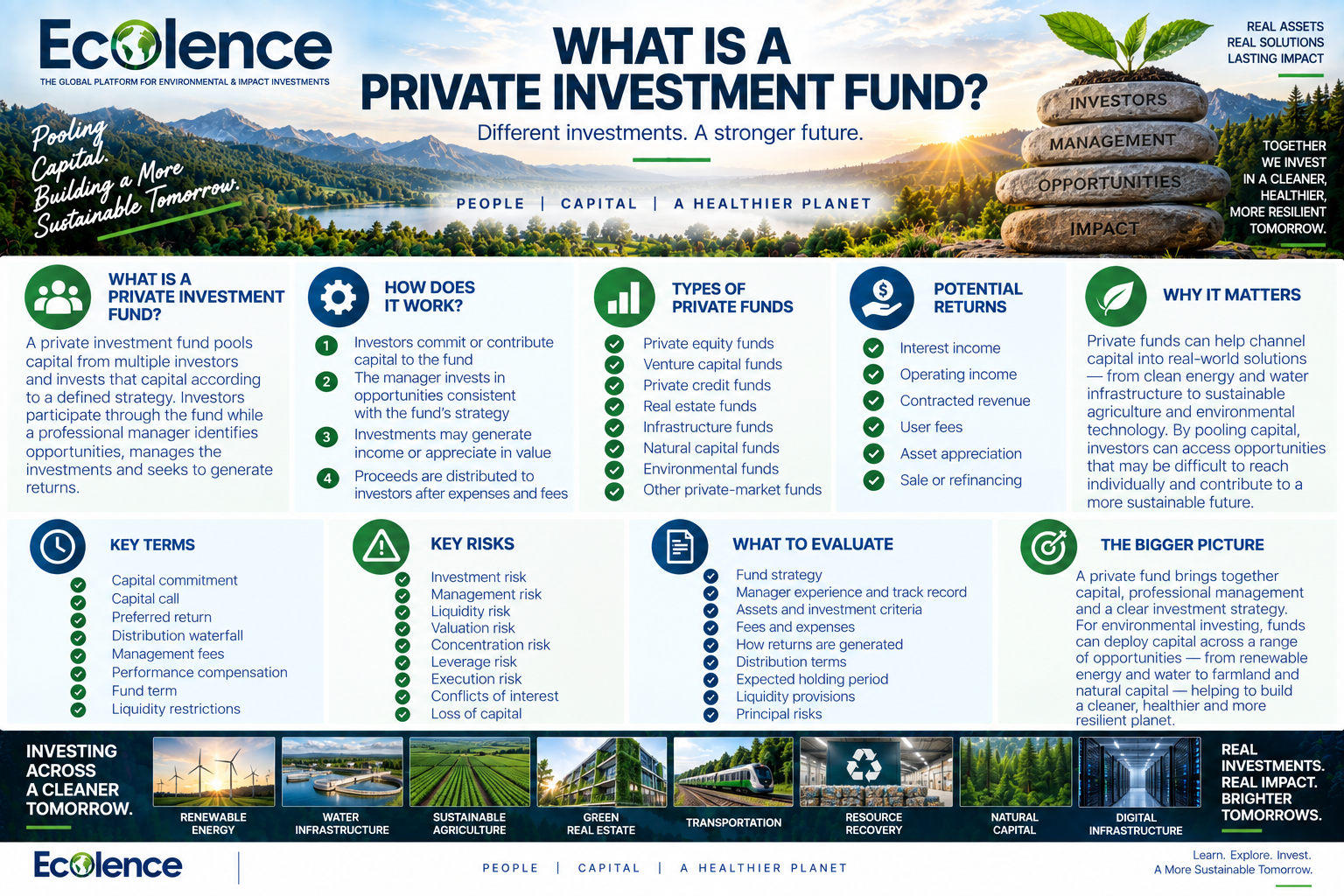
Private funds, private equity, private credit, real assets and project investments have existed for decades.
Regulation D and Regulation A offerings, along with digital platforms, are making certain opportunities easier to discover, although eligibility and access vary.
INVESTORS ARE LOOKING BEYOND PUBLIC MARKETS
Private environmental investments can offer exposure to businesses, projects and assets driven by trends such as food and water demand, infrastructure development, innovation and resource efficiency.
But opportunity comes with risk.
Private investments may involve illiquidity, long holding periods, limited information, valuation uncertainty and potential loss of capital.
THE BIGGER PICTURE
The environmental economy increasingly needs private capital.
Farms need capital.
Infrastructure needs capital.
Technology needs capital.
Environmental solutions need capital.
Meanwhile, investors are looking for ways to participate in the businesses and real-world assets shaping the future.
Capital seeking opportunity.
Environmental solutions seeking capital.
That’s the gap Ecolence is being built to help bridge.
Ecolence
The Global Platform for Environmental & Impact Investments
Educational content only. Ecolence does not provide investment, legal or tax advice. Private investments involve risk, including illiquidity and potential loss of principal.